
Star Trek Fleet Command: a faction and ship plan for your first month
How to set up your first month in Star Trek Fleet Command without painting yourself into a corner.
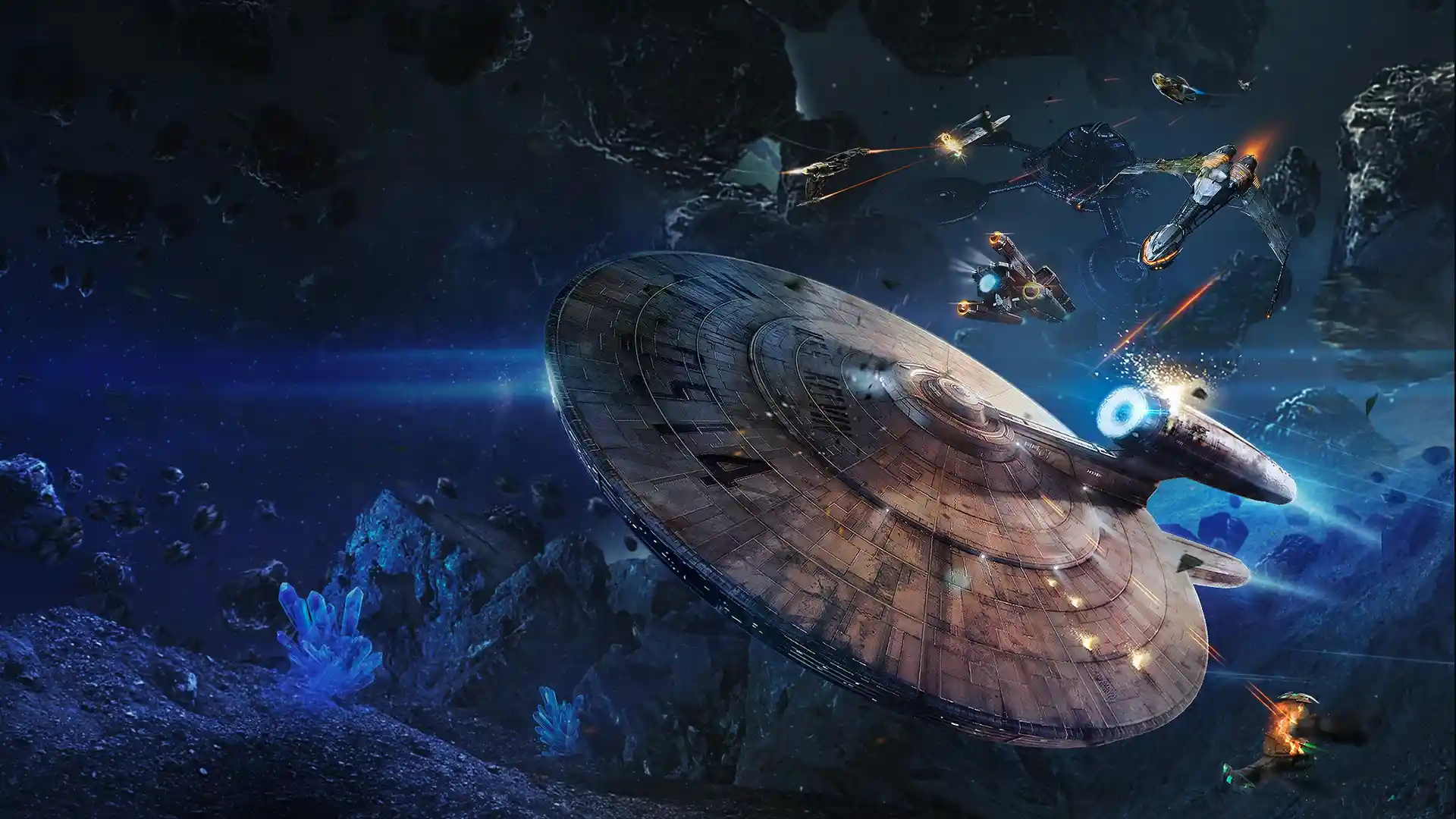
Star Trek Fleet Command is a 4X strategy MMO from Scopely, played on the desktop client as a real-time game of station building, ship combat, mining and alliance politics across a shared galaxy map. The early game is generous, but a few decisions in the first month set the ceiling on how fast you progress later. This guide is about making those decisions deliberately.
Before you start
- Play on the desktop client for the wider view and easier fleet management.
- Do not attack other players’ stations early; it invites retaliation you cannot answer yet.
- Keep your ships docked at your station when you log off to protect them and their cargo.
- Spend premium currency on build and research speedups or officer recruiting, not cosmetics.
- Decide your faction before you sink resources into faction-locked ships.
Step 1: Choose a faction to main
You have reputation tracks with the Federation, the Klingons and the Romulans, and each unlocks its own ships and store rewards. You can raise all three over time, but early on your resources are thin. Pick one to focus, based on the ship you want to be flying in a few weeks, and do that faction’s missions and hostile hunts first. Positive reputation with one faction pushes the other two negative, so committing also tells you which space is safe to operate in.
Step 2: Keep the ship triangle straight
Ships come in three combat classes that counter each other:
- Interceptors beat Battleships, lose to Explorers.
- Explorers beat Interceptors, lose to Battleships.
- Battleships beat Explorers, lose to Interceptors.
Before you send a fleet at a hostile or a player, check its class and bring the counter. A well-built ship still loses if it is on the wrong side of this triangle. Keep at least one decent ship of each class so you always have an answer.
Step 3: Alternate upgrades and research
Two systems drive your power: your station’s buildings and the research tree. New players often tunnel on one, hit a wall where everything needs a resource they are not producing, and stall. Instead, ping-pong: push a station upgrade, then while it builds and while you wait on resources, spend lab time on research that boosts mining rate, ship stats or cargo protection. Progress on several fronts at once is faster than maxing one.
Keep your builder and your lab busy at all times. Idle queues are wasted hours. Watch your operations building in particular, since it gates the level of everything else — but do not rush it so far ahead that the rest of your station cannot keep up, or you will unlock content your ships are not ready for. A common early trap is out-leveling your ships’ tier, which drops you into a bracket where bigger players and tougher hostiles farm you.
Step 4: Join an active alliance now
An alliance gives you a help function that shaves time off every build and research, shared territory, a store with useful currency, and — most importantly — other players who will not shoot you and may shield you if someone else does. Solo play in an open-world MMO is slow and exposed. Join one that is active in chat and actually helps each other, and contribute to alliance goals even at low level.
Step 5: Build a few strong crews
Officers slot into your ships in a captain seat and two bridge seats, plus a lower deck. The captain’s ability is the one that fires, so crews are built around pairing a captain with two officers whose abilities and synergy support that captain’s role. Do not level every officer you collect. Identify two or three crews — say one for mining protection, one for hostile grinding, one for player defense — and pour officer XP and upgrade materials into those. Early standouts tend to be officers you get from faction missions and events; check their traits against what you are actually doing.
Key takeaways
- Pick one faction to main early so your reputation, ships and store rewards all pull in the same direction.
- Learn the rock-paper-scissors of Interceptors, Explorers and Battleships before every fight.
- Alternate between station upgrades and research rather than tunnelling on one track.
- Join an active alliance immediately; it multiplies your resources and protection.
- Officers matter as much as hulls; build a small set of strong crews instead of leveling everyone.

Comments 0