
Star Trek Fleet Command Review: The License Does a Lot of Heavy Lifting
A galaxy-map strategy MMO that Trek fans will recognise and everyone else will find slow, dated and expensive.
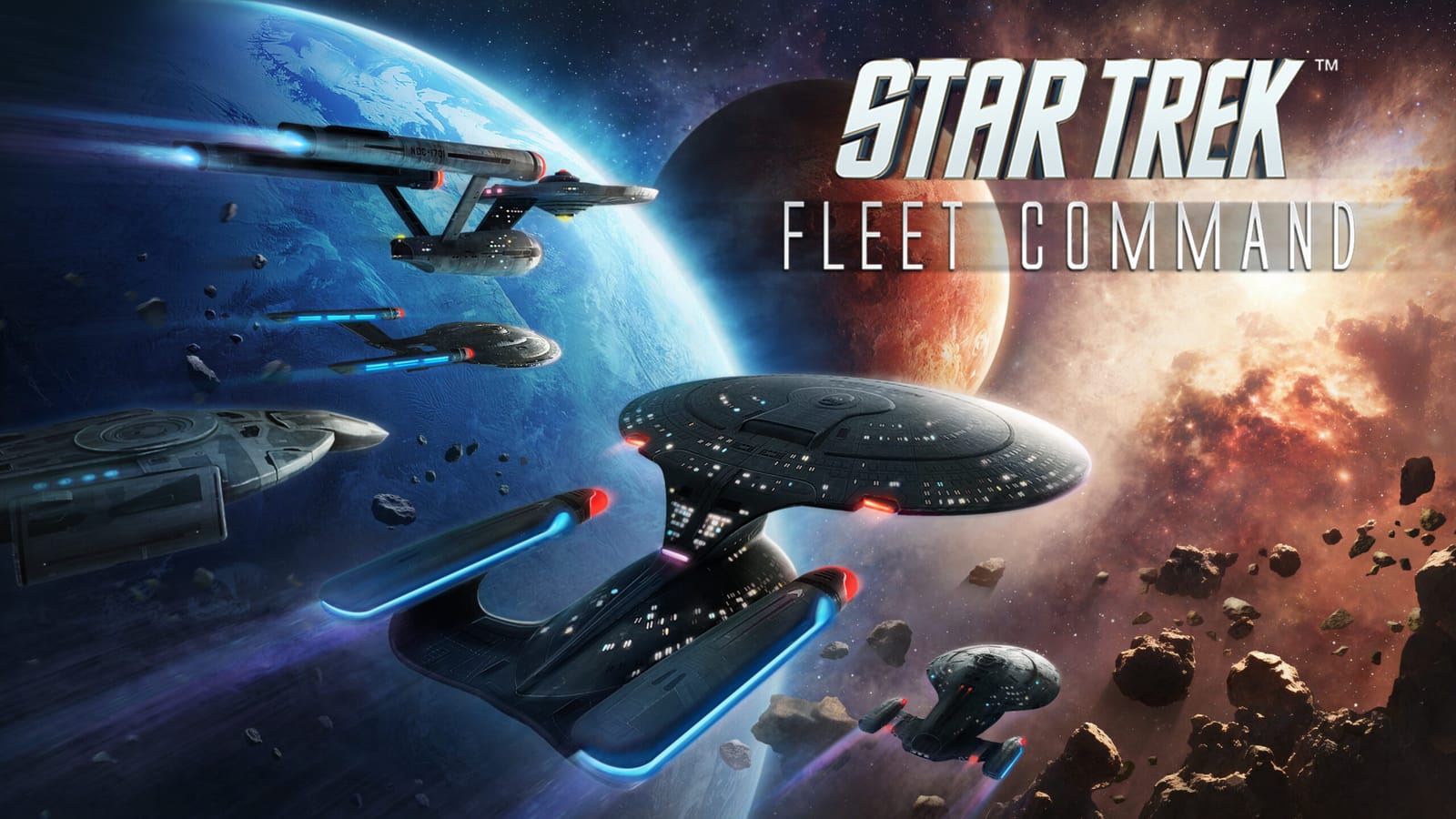
Star Trek Fleet Command is Scopely’s persistent-world 4X MMO, and it has had a PC and macOS client since early 2023. You run a starbase, assemble a fleet of licensed ships, crew them with officers pulled from across the Star Trek shows and films, mine resources from a shared galaxy map and fight or ally with the other players in your server region. The verdict up front: if the Trek fantasy is what you want, it delivers that surface, but as a strategy game on desktop it is dated, slow and built to extract.
How we tested
We spent about 20 hours on the Windows client, taking a new commander through the tutorial and into the early-mid game: station upgrades, the starting ship roster, faction reputation grinds, systems mining, early PvE hostiles and a spell in a low-level alliance. Testing covered the research and construction queues, the officer and blueprint systems and the store and event screens. The client ran fine on modest hardware, which is not surprising given what it is.
The licence is the hook
The reason to be here is the fiction. The ships are the ships, an early Constitution-class, a Klingon Bird-of-Prey, later hulls from across the franchise, and the officers are recognisable characters whose passive and active abilities you slot into a crew for synergy. Faction space is themed around the powers you would expect, and the events lean on episodes and eras fans will know. For a certain kind of Star Trek viewer, collecting and upgrading this specific set of ships and crews has a pull that a generic sci-fi 4X would not.
Underneath, it is a familiar grind
Strip the paint and the systems are standard for the category. You queue buildings and research on timers that grow from minutes to many hours to days. You grind faction reputation and node resources to unlock the next ship tier. You send fleets to mine, to kill hostiles for loot, and to fight rival players over territory and objectives. There is competent crew-building strategy in the officer combinations, but the loop is mostly logistics and patience, delivered in short check-ins across the day.
The desktop experience
The PC and Mac client is the mobile game in a window. It works, mouse control is better than tapping and the larger screen helps readability, but nothing about the interface was designed for a desktop player, and it shows in the menu density and the awkward flow. Scopely has done maintenance work around the account system, including a unified Scopely Account and a move to passwordless login, plus stability and login-security fixes, but these are plumbing improvements, not a reworked client.
Monetisation: constant and pointed
This is where the game earns its low score. The event calendar is dense and runs on fear of missing out, the store is always presenting a pack, and the mid-game deliberately slows to the point where refined resources, blueprint bundles, officer shards and battle passes look like the obvious release valve. Free progression exists but it decelerates hard, and the competitive layer rewards spending directly. New players routinely describe hitting a wall a few weeks in. You can play without paying; the game is structured to make that unpleasant.
Who it’s for
This is for dedicated Star Trek fans who want a long-term collection-and-strategy game set in that universe and are prepared to join an active alliance and check in daily. If you are not attached to the licence, or you want a strategy game that respects your time and does not run an aggressive storefront, there is no reason to pick this over a better-designed 4X.
Verdict
Star Trek Fleet Command is a licence-first product. The fan service is genuine and reasonably deep, the crew-synergy system has some strategic texture, and an organised alliance can make the server metagame engaging for people already invested in the setting. Within that narrow audience, it does a job.
For everyone else it is hard to recommend. The desktop client is an unreconstructed mobile port, the progression is time-gated to the point of tedium, and the monetisation is among the more relentless in a genre already known for it. If you love Star Trek and want a persistent-world game to live in, go in with a group and clear expectations about the economy. If you just want a good 4X on PC, keep looking.
- The Star Trek licence is the main appeal: recognisable ships, factions and officers from across the franchise.
- The desktop client is a wrapped mobile app, functional but not designed for a keyboard-and-mouse player.
- Progression is heavily time-gated and the mid-game slows to a crawl without spending.
- The event calendar and store are aggressive, with strong fear-of-missing-out pressure.
- Worth a look only if you are a committed Trek fan ready to join an active alliance.
Pros
- Extensive, recognisable use of the Star Trek licence across eras
- Officer-crew synergy adds a real layer to fleet building
- Alliance metagame can be engaging for invested players
- Light client that runs on almost anything
Cons
- Desktop client is a wrapped mobile app, not a desktop design
- Progression is heavily time-gated and stalls in the mid-game
- Aggressive, FOMO-driven event calendar and store
- Competitive relevance is closely tied to spending
Comments 0